Web threats / iOS exploit kits
Coruna iOS exploit kit
Coruna is an iPhone exploit kit loaded through hidden website frames. We have matched its dispatcher and beacon code on 7,612 sites since 9 October.
Coruna in numbers
Since 9 October, the first Coruna match in our records, counted on 28 November 2026. How we count.
| Sites with Coruna code | 7,612 |
|---|---|
| Sites with a match in the last 30 days | 7,521 |
| Operator hosts our rules matched | 105 |
| New sites in October | 223 |
| Still serving it when recaptured at least 25 days later | 68 of 73 sites (93%) |
| Sites running WordPress (captured since 25 September) | 30% |
A one-pixel frame opens the dispatcher
Coruna is an exploit kit targeting iPhones running iOS 13.0 through 17.2.1. Google Threat Intelligence Group's Coruna report describes its browser fingerprinting and selection of an exploit chain for the device.
The injected frame in a compromised page is one pixel wide and high, with aria-hidden="true" and tabindex="-1". It loads hxxps://js[.]apiforxwork[.]com/qqtime/qqtime.html. That wrapper opens hxxps://js[.]apiforxwork[.]net/qqtime/qqtime.html, where a script imports the dispatcher.
Routers pair Coruna with DarkSword
Coruna also reaches iPhones from sites the attackers build. A fake TokenPocket wallet download site runs a router that sends iOS 13 to 17 to Coruna and iOS 18 to DarkSword. The iOS exploit kits page follows that route.
A server at 154.222.16[.]220 does the same behind a fake Cloudflare check branded for OKX. When its DarkSword stages fail, the loader falls back to Coruna, and both kits report to one panel. Its router keeps a third route, C10, for iOS 26, and on 5 November 2026 that route was switched off with nothing behind it. It was live again on 16 November as the iOS 26 route of GhostWave, a fork of DarkSword.
A compromised WordPress shop we captured on 10 November 2026 hosts both kits itself, in /wp-includes/js/analystic/assets/js/. Its gate sends iPhones below iOS 18 to a Coruna stage in that folder, 49554fde7424c31c.js, and the dispatcher sets the same folder as the base it fetches modules from. The DarkSword page has the gate.
A lighter router from the same kit, lp-router.js, sends iOS 13 to 17 to Coruna. Two Chinese source-code markets sell the three chains together as a kit called Caishen iOS C2 V2. The DarkSword page has the listings.
An external mode for other people's sites
Some landing pages carry a block of HTML that loads the router from someone else's server. The tag carries data-coruna-external="1", a data-channel-code and the router host as data-coruna-base. Next to it, the page opens off-screen frames to /static/<32 hex>.html?c=<channel> on that host, the Coruna entry for iOS 13 to 17. The router sees the external flag and skips its own Coruna frame.
So one router host serves many landing pages, each with its own channel code. The router hosts we have seen are www.chainlk[.]com, web.iosapp[.]shop and xlysapp[.]com. One landing page, tgmessaging[.]com, is a fake Telegram download page using the channel master_global.
The same kind of tag arrived on major sites in November 2026, inside scripts served by compromised vendors such as Optimizely and StorifyMe. It loads boot.js with data-landing, data-channel-code and data-chain-url. That router sends iOS 13 to 17 to A8/a.html. On 16 November an iOS 17.5 visit got that page and a script named with 32 hex characters, a Coruna stage that installs globalThis.obChTK from a Base64 module map. The same host serves a channel weifile.html page that loads another such stage, with a beacon to l7bcsnwc7nzr3uo[.]icu/api/iptj written into it. A later track.js frames that page off-screen on iOS 18.6 and below. The DarkSword page has the vendors and the iOS 18 route.
weifile.html is a router as well as a Coruna entry. Each of the 55 builds we have read loads the channel's index.js, the Coruna stage, below iOS 18, and on iOS 18 frames DarkSword's /next-chain/frame.html on the same host. Some builds first claim the visitor at /next-chain/chain_hold.php and load frame.html through a hidden quiet.html, once per session.
The largest deployment is a network of Philippine online-casino sites. From 10 November 2026, at least 3,821 of them framed knzcmny6mbpy10z[.]icu/channel/G.J.LJ/weifile/weifile.html, all promoting one casino, PH6655, through one affiliate link, l4x3s9v4[.]com?ch=76184. That is 57% of the 6,747 sites we have matched framing a weifile.html router. Its build is the only one of 79 that reports exploit results and sends a heartbeat for ten minutes to tell whether the exploit crashed the tab. 3,821 Philippine casino sites frame Coruna and DarkSword has the network, its failover hosts and the telemetry.
Captures from 25 November 2026 found the weifile.html frame planted in more places. Some sites hide it with zero width and height, no opacity and visibility:hidden, beside a redirect that fires after 400 milliseconds. One host put it ahead of the body of an nginx 403 error page. A video site carried it in its analytics block as a visible frame 10% of the page high, with the id maccmsbot. A shop stored it in its JSON site settings as an onerror handler that adds a frame with the id __wf_frame and passes the page address in ?ref=.
Some of the pages that carry the weifile.html frame also load stats-collector.obf.js from 9527.market.uk[.]cc. It loads nothing else. It looks up each visitor's IP address and location through ipinfo.io and api.ip.sb and sends enter, heartbeat and leave events to /api/collect.
A separate router, next-chain, keeps Coruna for iOS 13 to 17.2.1 and adds SilkPath and GhostWave for later versions. The DarkSword page has its version map.
The operator's portal
On 26 November 2026 we captured the home page of an operator portal on a bare IP address. Its Chinese title means operations back end, and it calls itself the "Coruna Lab Agent Portal", a locally deployed instance. It lists four delivery channels, each a /channel/<code>/weifile/weifile.html page like the ones hacked sites frame: a main channel, one for iOS 18, one marked overseas and a paused test channel, with /s/<id> short links that lead to them.
The portal claims a version table covering every iOS and iPadOS release from 1.0 to 27.2.1, plus macOS, watchOS, visionOS and tvOS, with 418 of 425 versions enabled and seven chain strategies. The one chain it marks live runs on iOS 18.4.0 to 18.7.2 with four workers, which is DarkSword's range. It counts 12 kinds of data taken, 18 wallets across 30 app bundles, and 12 upload endpoints.
The portal also says how stolen data reaches it. /api/ds/chain-targets gives each phone its chain plan and the upload host, and the chain files have their hard-coded server names rewritten as they are served. A reply from a next-chain host on the same day named the chain, a grade for the phone's iOS version, the recommended worker, the entry point /next-chain/rce_loader.js, and the upload host and ports. A server name written in a chain file is not where the data goes: the server's reply decides.
A landing that counts its failures
A next-chain landing captured the same day, on a site titled "Energy Rental - 24/7 Unattended Instant Delivery", frames the kit's /qqtime/ loading page after a countdown. It adds the visitor's device ID, lab_device_uuid, to the frame address and logs each step to /api/ds/log.
A crash in Safari reloads the whole page, so the landing records when it opened the frame and will not open it again for 15 seconds. The comments around that guard quote the operator's logs. An earlier version blocked repeat visits for ten minutes, and 1,965 of 2,873 skipped launches should have gone ahead. The comment explains why that mattered: pwn() "is only 0.144% per attempt". The exploit step works about once in 700 tries, so every reload is another chance.
obChTK resolves the modules
The script decodes a Base64 dispatcher and installs it as globalThis.obChTK. Its module methods include hPL3On, ZKvD0e, po3QmN and eW4__H. Hash keys identify modules, and salted filenames determine the resources it fetches and runs.
The dispatcher runs in the external frame, so the first-party page source shows only the injected iframe.
The beacon repeats its IP lookup and POST
The appended beacon fetches the visitor's public IP address as text and builds an OS/version description from the user agent. It posts JSON to hxxps://1x8gmjbdq3tepgr[.]icu/api/ip-sync/sync with channelCode, ip, deviceVersion and domain fields.
domain comes from window.location.hostname. In this chain it reads js[.]apiforxwork[.]net, where the frame executes. The timer starts after two seconds and repeats every ten seconds, performing the IP lookup on each pass. A separate timer attempts to reload the parent every two minutes.
What we see
| Month | New sites |
|---|---|
| September | 0 |
| October | 223 |
| November so far | 7,389 |
Among successful captures since 25 September, 2,024 of 6,803 Coruna sites ran WordPress.
Checking a Coruna injection
Keep the first-party HTML and each document and script loaded through its frames. Look for:
- a one-pixel
aria-hiddenframe loading an externalqqtime/qqtime.htmlpage - a wrapper that opens another frame on a different host
globalThis.obChTKand its hash-keyed module dispatch- JSON POSTs to
/api/ip-sync/syncwith the beacon's field names - recurring IP lookups and parent-reload timers
globalThis.obChTKloaded from a folder under/wp-includes/js/that WordPress does not ship- a script tag with
data-coruna-externalordata-channel-code, and off-screen frames to/static/<32 hex>.html?c= - frames to
/A8/a.html?channelCode=or aweifile.htmlpage under a channel folder platform_module.js,utility_module.jsorchain_inline.jsloaded from another host after ansdk/chain.jsembed- a 1-pixel frame to a
weifile.htmlpage atleft:-9999px, between<!-- iframe-inject:comments that name a host - a frame with the id
maccmsbotor__wf_frame, or a zero-size transparent frame, loading aweifile.htmlpage, including on error pages and in stored site settings - a script named
stats-collector.obf.js, or requests to ipinfo.io and api.ip.sb followed by posts to/api/collect - a frame to
/qqtime/?deviceUUID=, alab_device_uuidcookie or storage key, and requests to/api/ds/logor/api/ds/chain-targets
Retest the reported path after clearing cached copies and follow every frame request it makes.
Research on Coruna
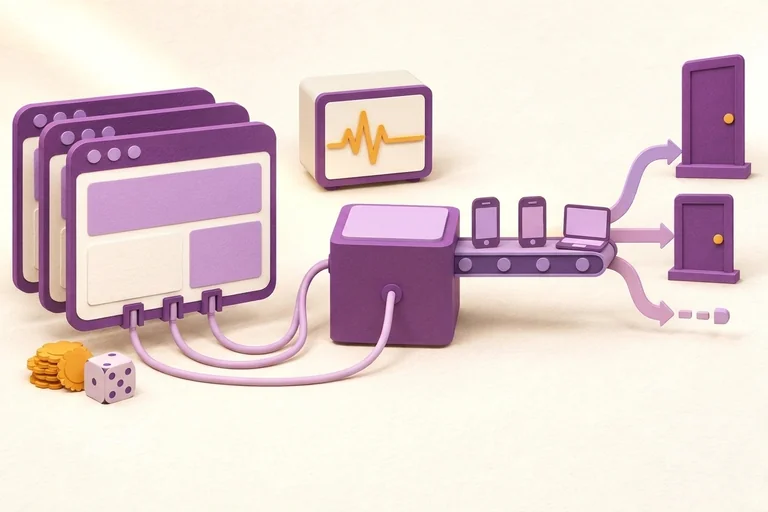
3,821 Philippine casino sites frame Coruna and DarkSword
At least 3,821 Philippine online-casino sites promoting one casino through one affiliate code began framing a Coruna and DarkSword iPhone exploit router on 10 November 2026, less than six hours after the frame domain was registered. Out of 79 builds of the same router page in our scans, only this channel logs exploit results and ten-minute survival heartbeats.

OPTIMJACK: the iPhone exploit on BBC and Zoom is for rent
The iPhone exploit router that reached BBC, Zoom and other sites through poisoned vendor scripts in November 2026 is a rental service. Its operator rents it by channel code, with a reseller console for the stolen data, and the vendor attack ran on the router's house channel.
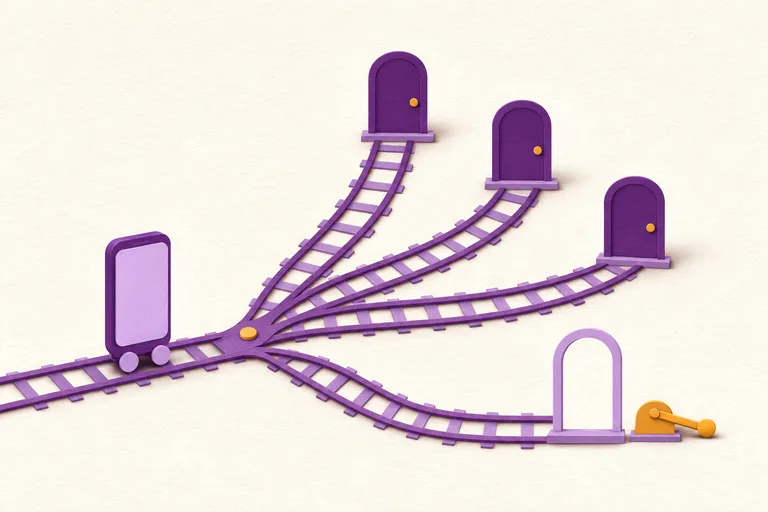
DarkSword router's iOS 26 route, C10, is switched off
An iPhone exploit server we captured on 4 and 5 November 2026 picks Coruna or DarkSword by iOS version. It keeps a third route, C10, for iOS 26. A config file has C10 switched off, nothing is deployed at its path, and its only iOS 26 plugin is filed under a Google Chrome CVE.